
Buyer's Guide
How Tiles Are Packed for Export (and Why It Matters for Breakage)
A tile order can be perfect leaving the factory and arrive with a broken corner in every third box. The difference is almost always the packing.
The carton
Tiles are stacked on edge, not flat, inside a five-ply corrugated carton with the coverage, size, series and batch printed on the outside. Stacking on edge lets each tile support the next and spreads load through the stack rather than onto the bottom tile. Carton weight is kept to a level a person can lift and a forklift can handle in bulk — usually around 25–35 kg depending on tile size.
The pallet
Cartons are stacked onto a heat-treated wooden pallet (heat treatment, ISPM-15, is required for wooden packaging entering most countries), squared off, and wrapped with stretch film plus corner boards under high-tension strapping. A well-built pallet moves as one block; a loose one lets cartons shift and grind against each other every time the ship rolls.
The container
We load both ways — palletised or loose (floor-loaded) — depending on what the customer wants. Most African-bound orders go loose to fit more cartons per container and cut freight cost per square metre, and it's standard practice on these routes; palletised costs a bit more in space but handles rougher transit and multiple stops better. Either way, cartons are stacked tight so there's no room for movement, heaviest at the bottom, with dunnage or airbags filling any gaps at the doors — a loosely packed container, palletised or not, will have shifted cargo by the time it reaches a transhipment port.
What to check
- Carton grade — five-ply for floor tile, not three-ply.
- Palletised or loose-loaded, as you choose — both go out routinely, loose is common on African orders to cut cost per square metre; either way, ask how it'll be stacked and secured.
- ISPM-15 stamp on the pallets, or your container can be held at the destination.
- Batch numbers on the cartons, so a shade or size issue traces to one run.
- Photos of the loaded container before the doors are sealed — most exporters will send these.
Eternal Overseas packs to this standard as routine — more on the checks we run before packing on our quality control page.
Loading, as it actually happens
Photos from our yard — real shipments, not stock images.
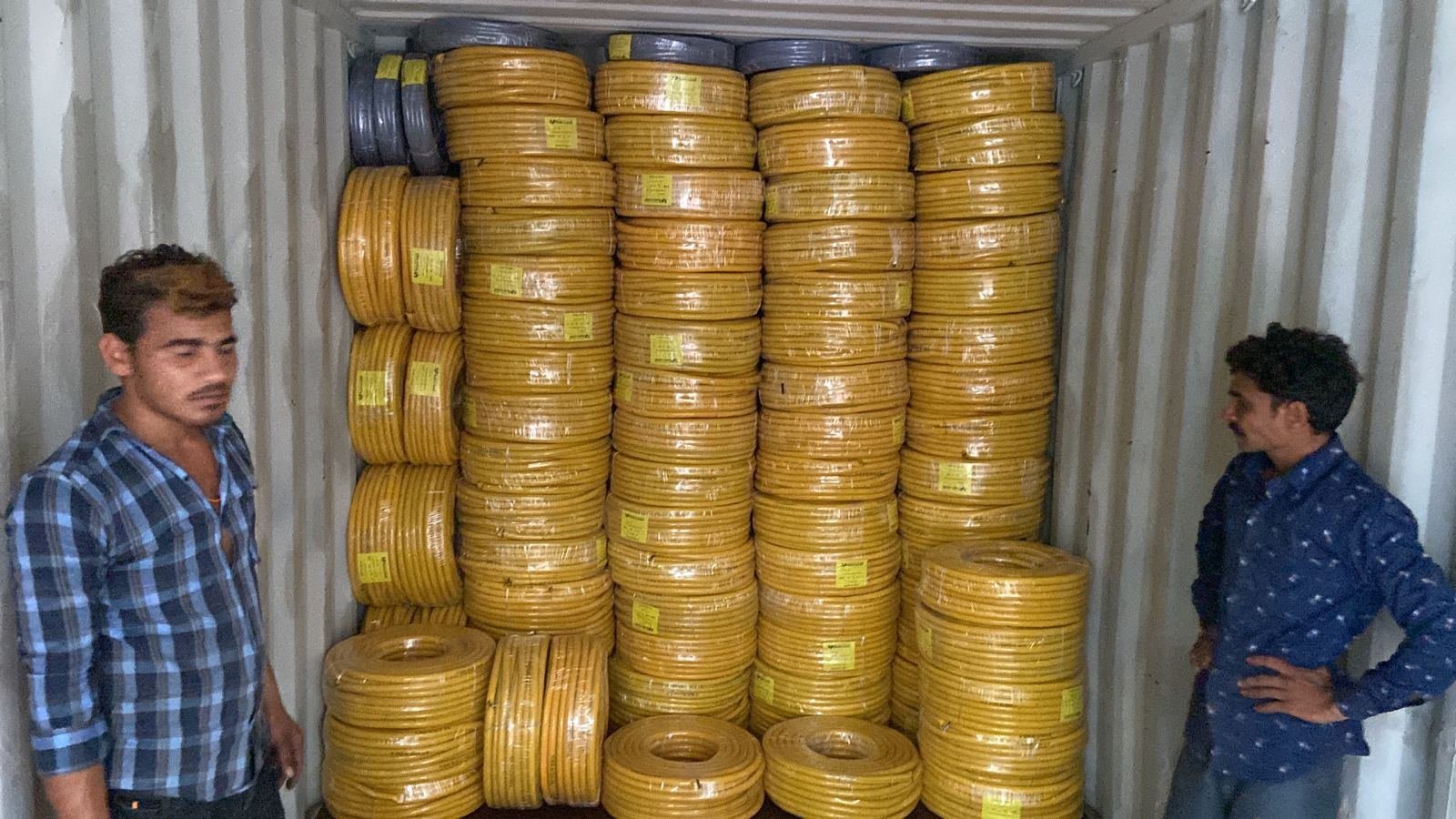
PVC hose coils, floor-loaded 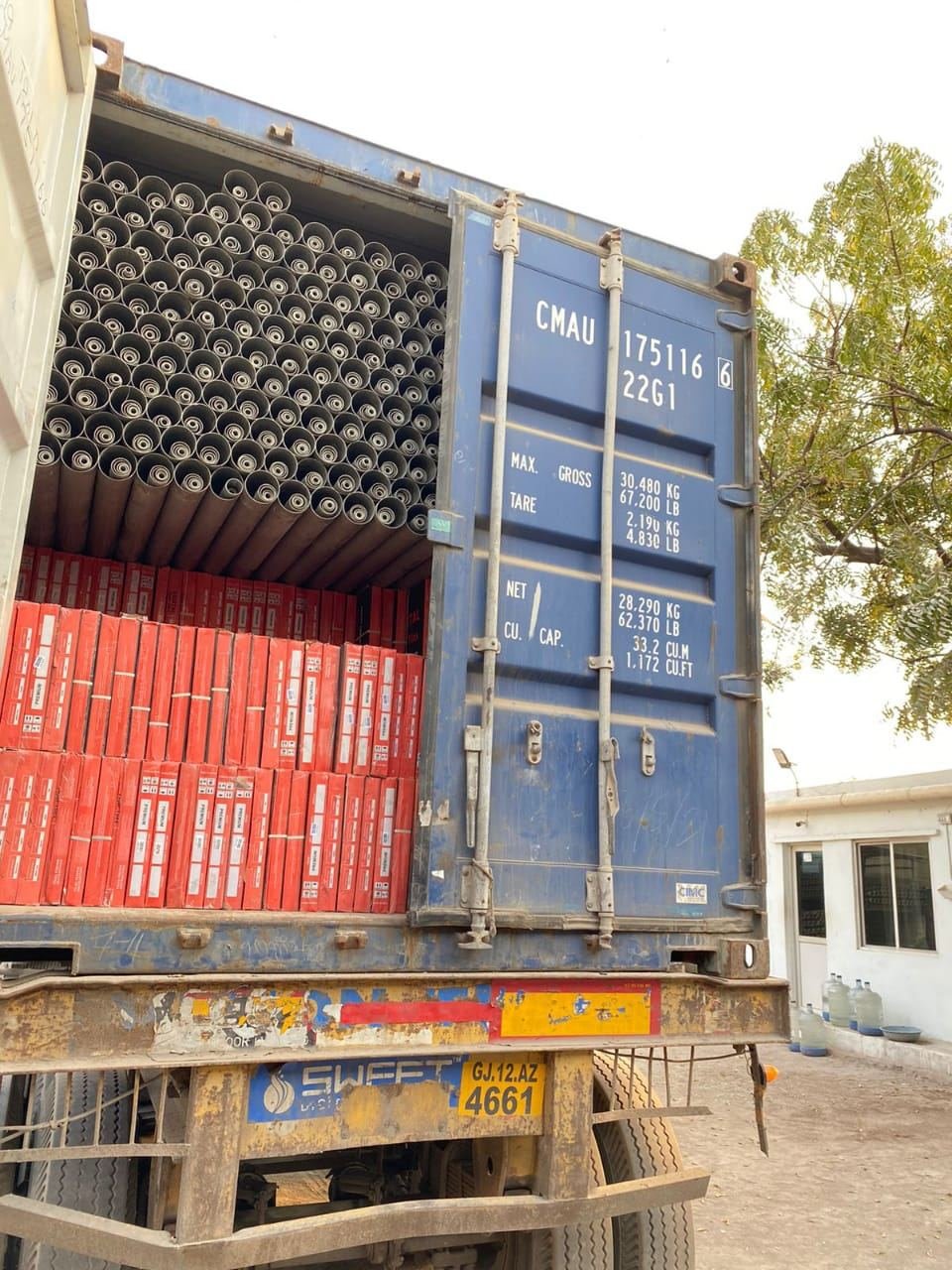
PVC pipe bundles with fitting cartons 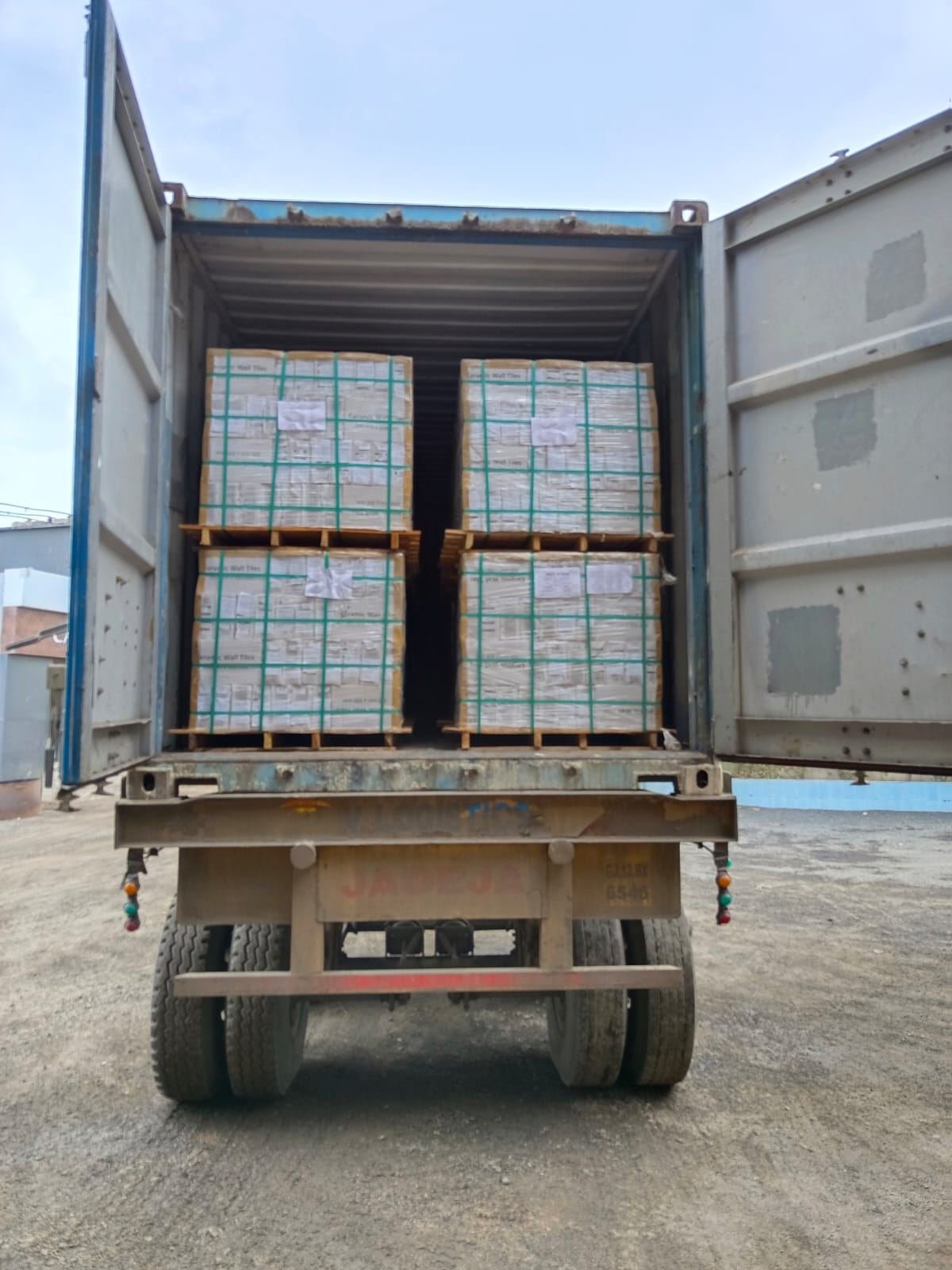
Wall tile pallets, strapped 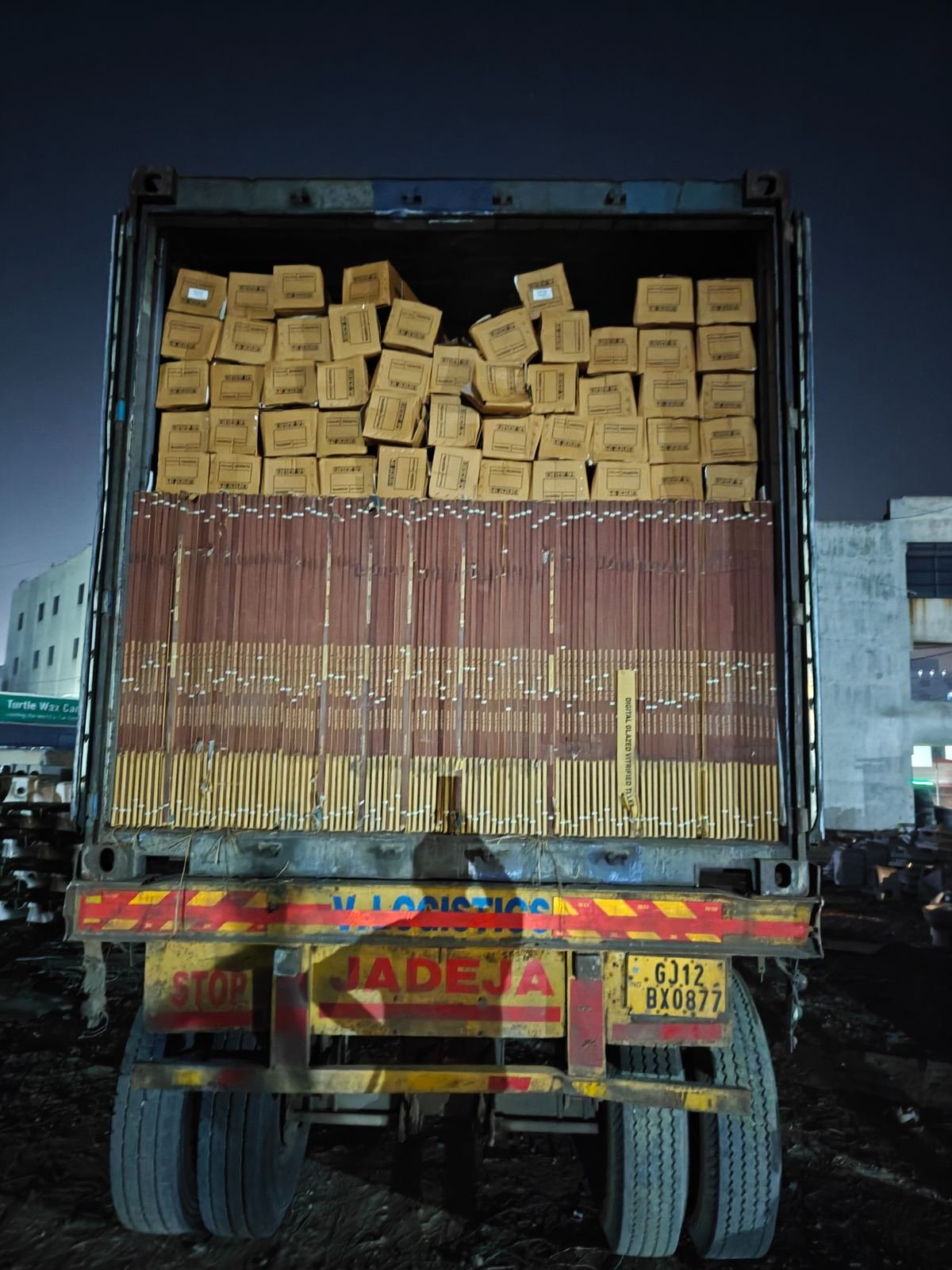
Vitrified tile cartons, loose-loaded 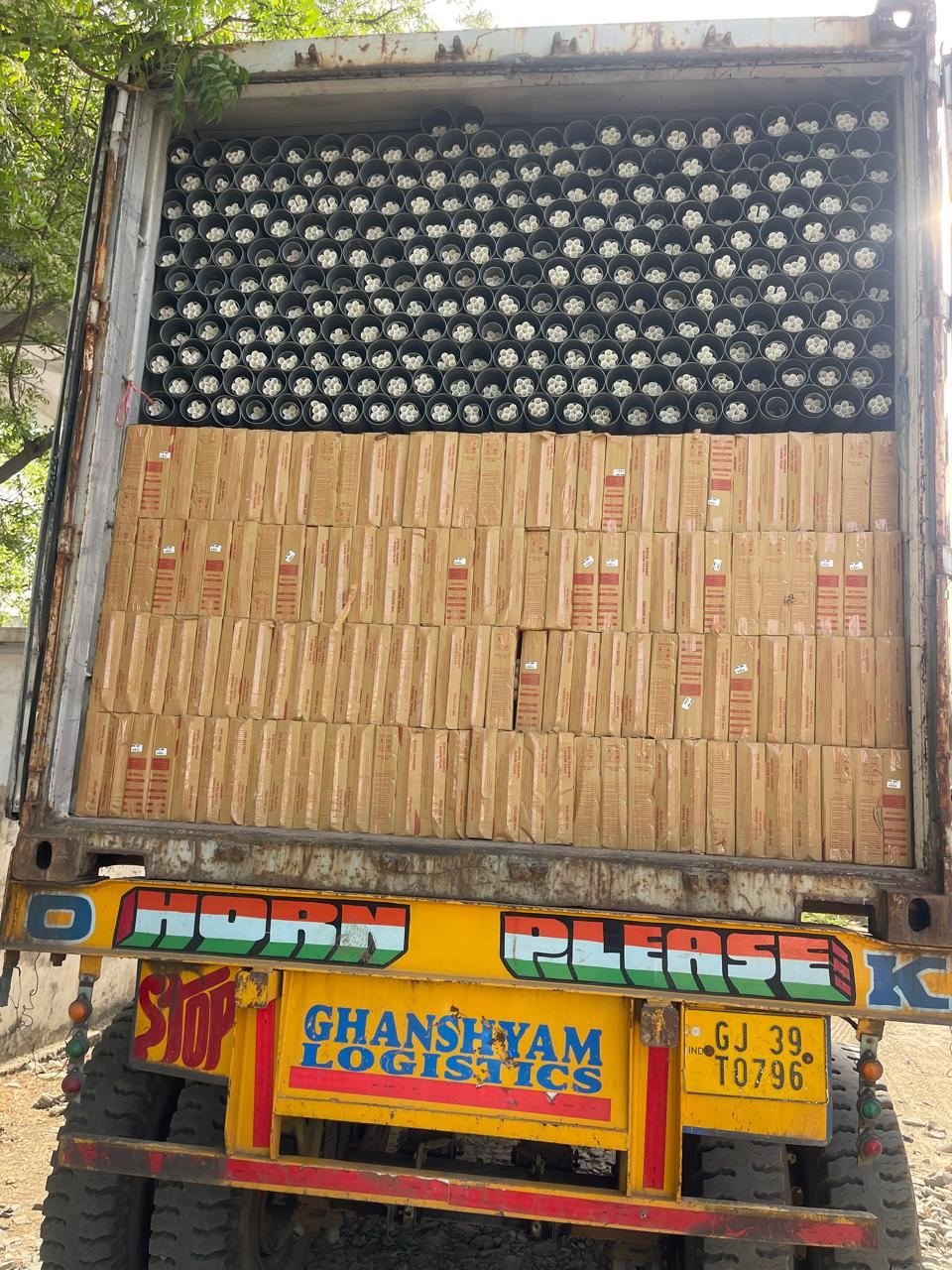
One-piece WC pans, wood-block cushioned 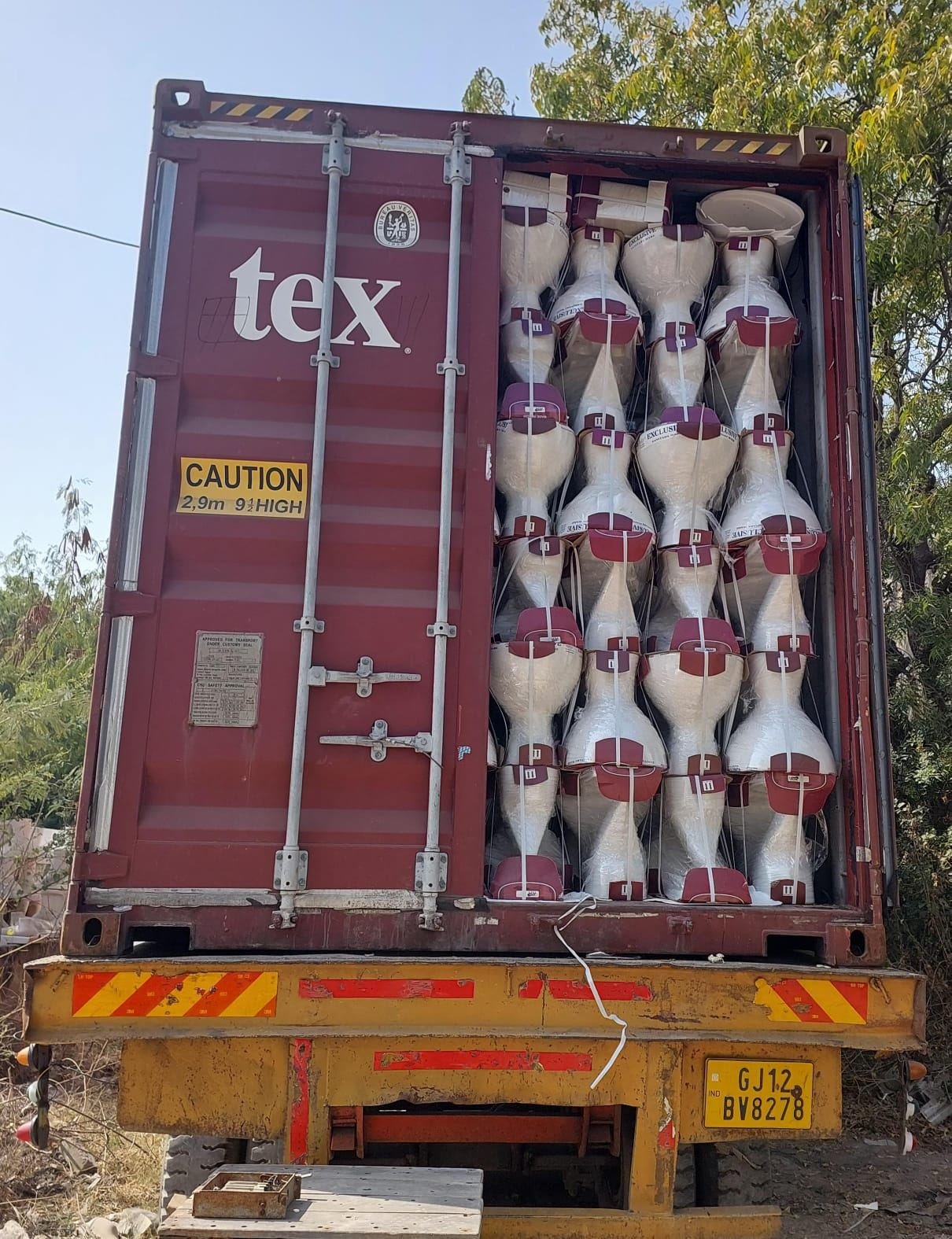
Wash basin pedestals, wrapped 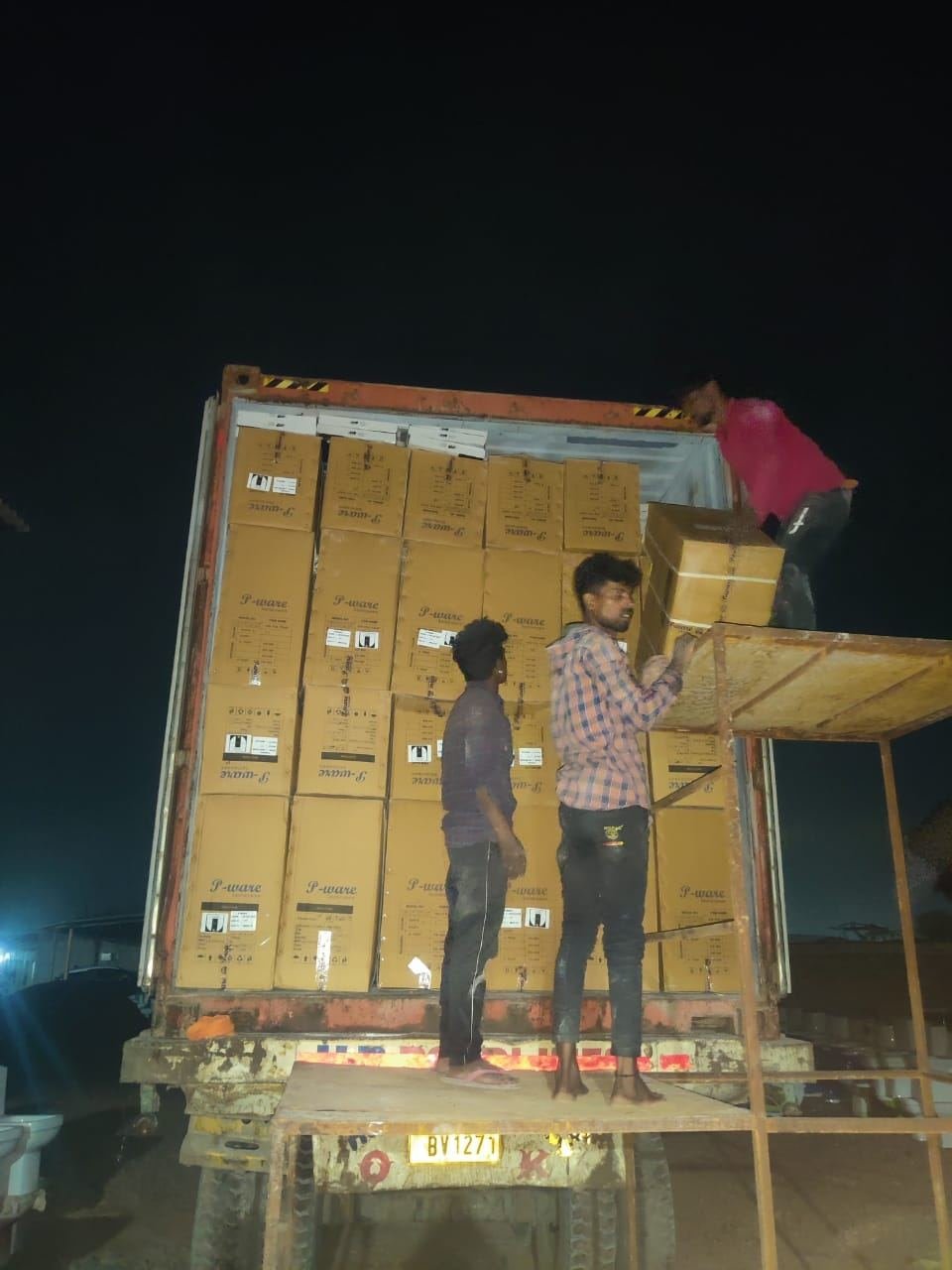
Sanitary ware cartons, night loading 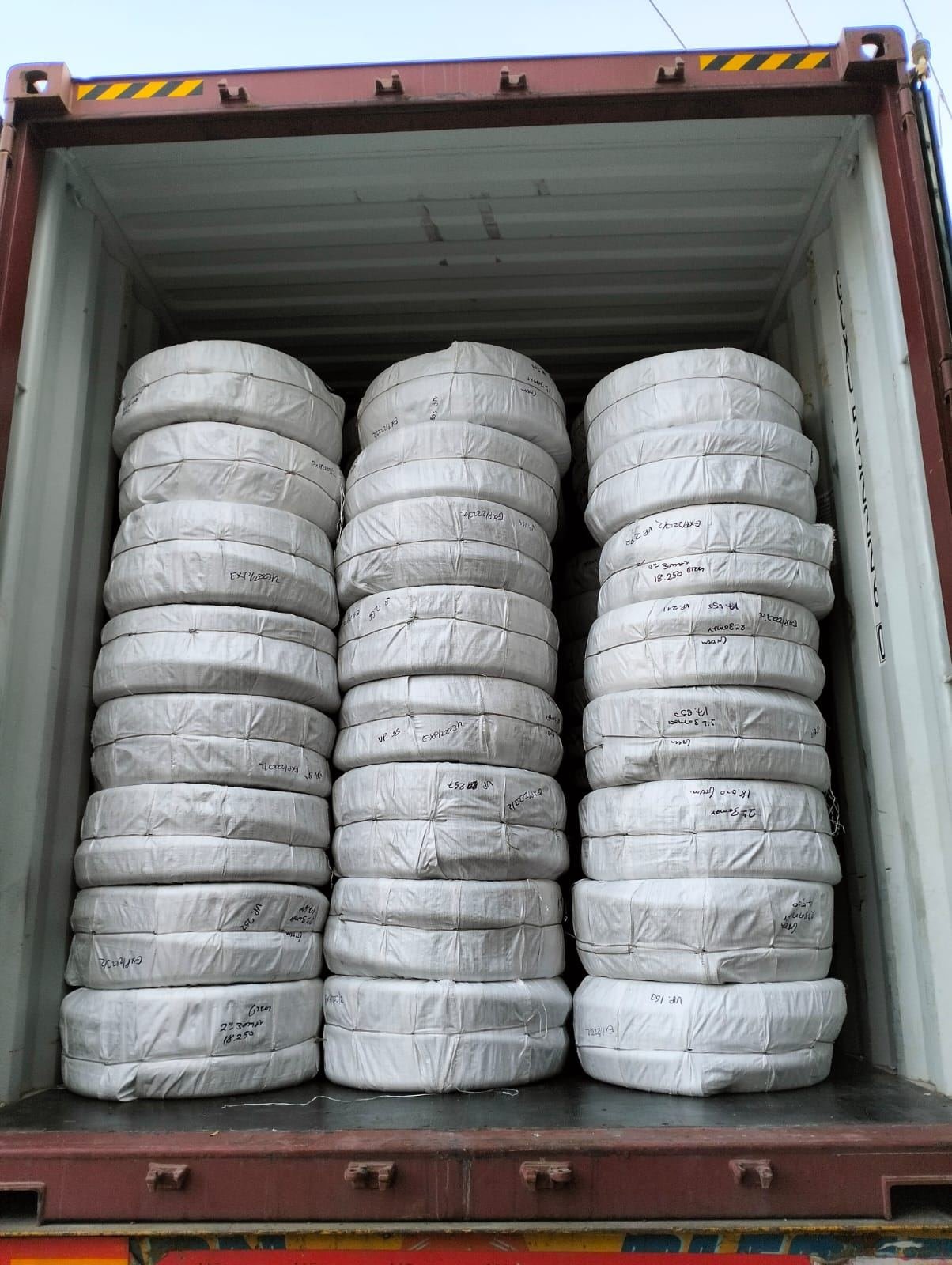
Woven bag bales, stacked 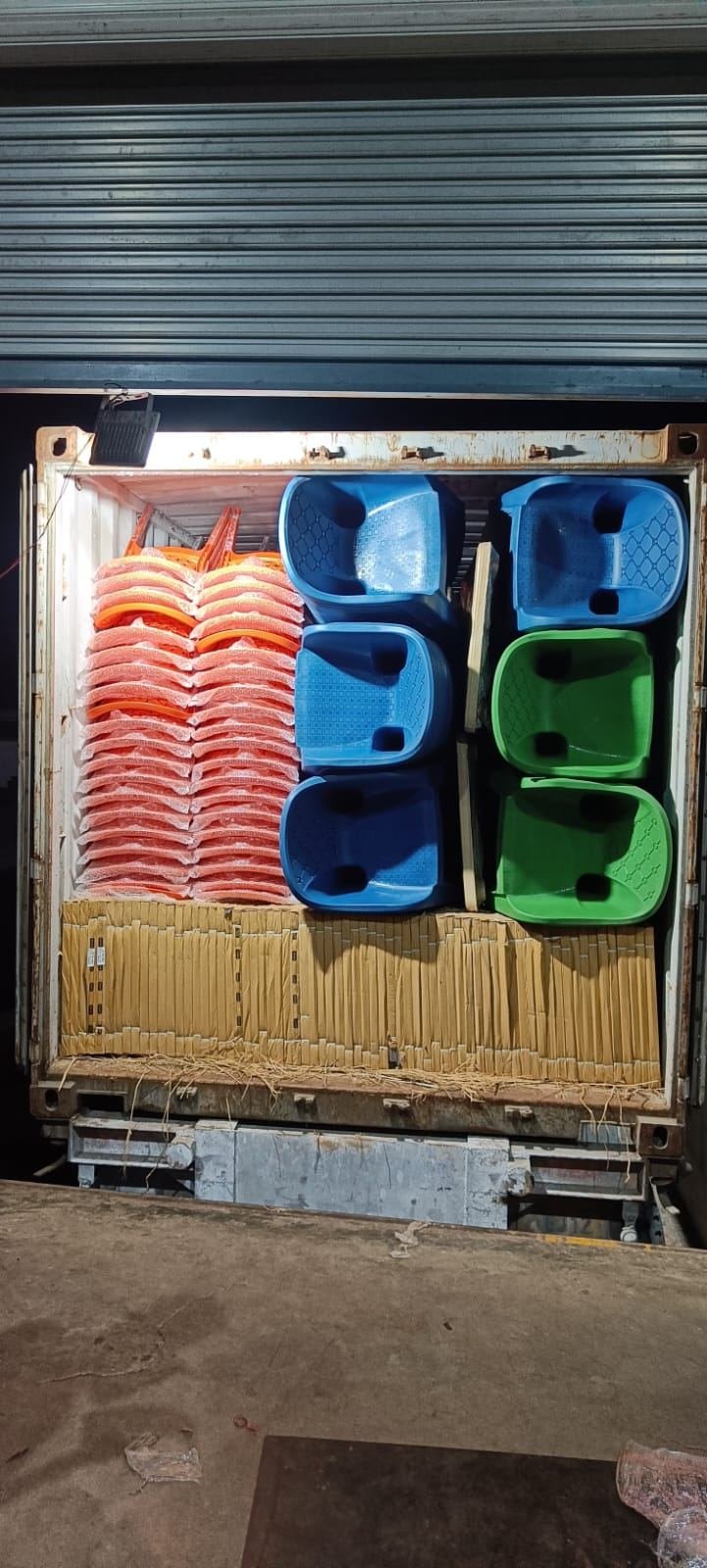
Plastic chairs and tubs 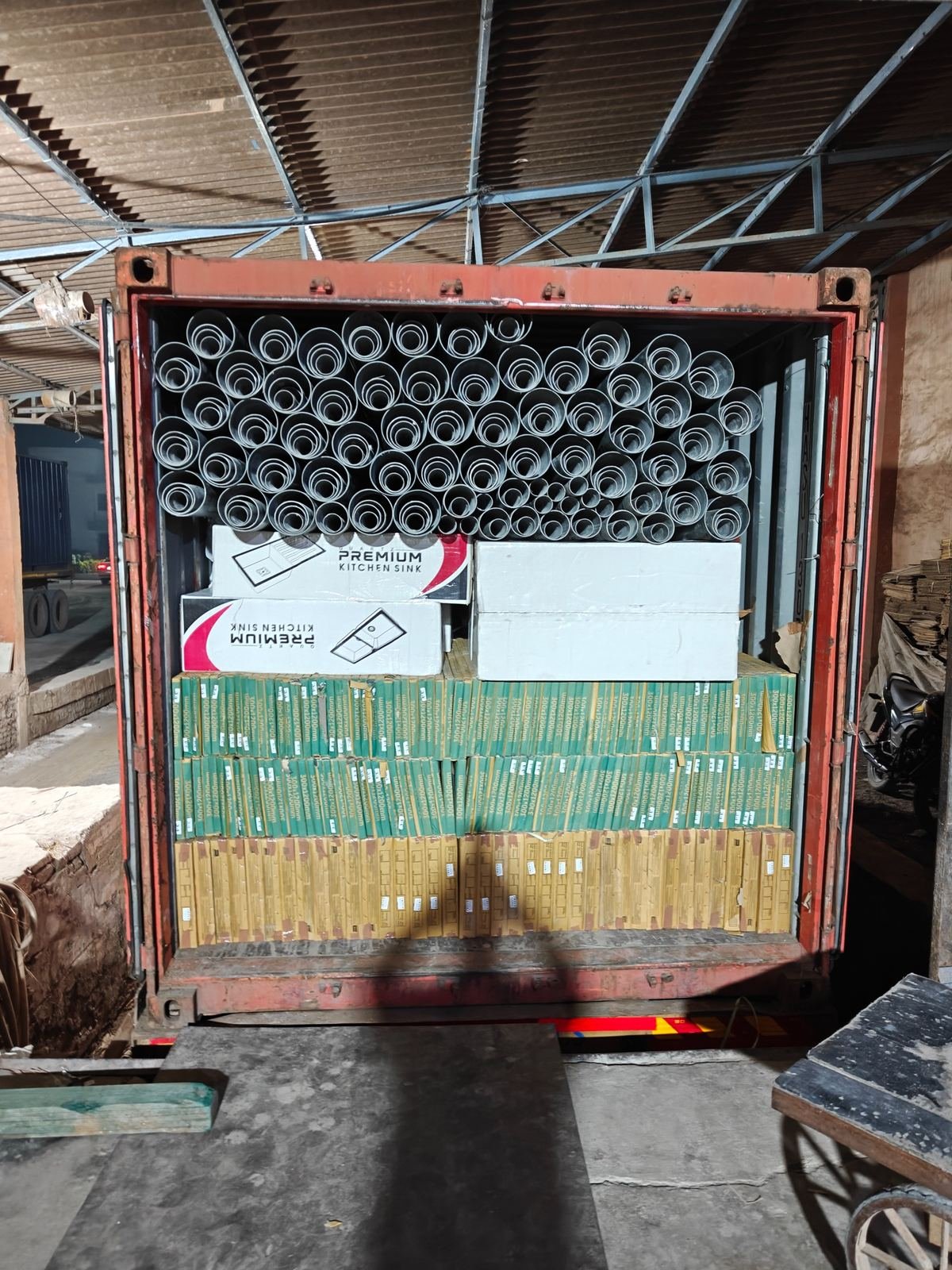
Sink cartons, mixed with tiles and pipe 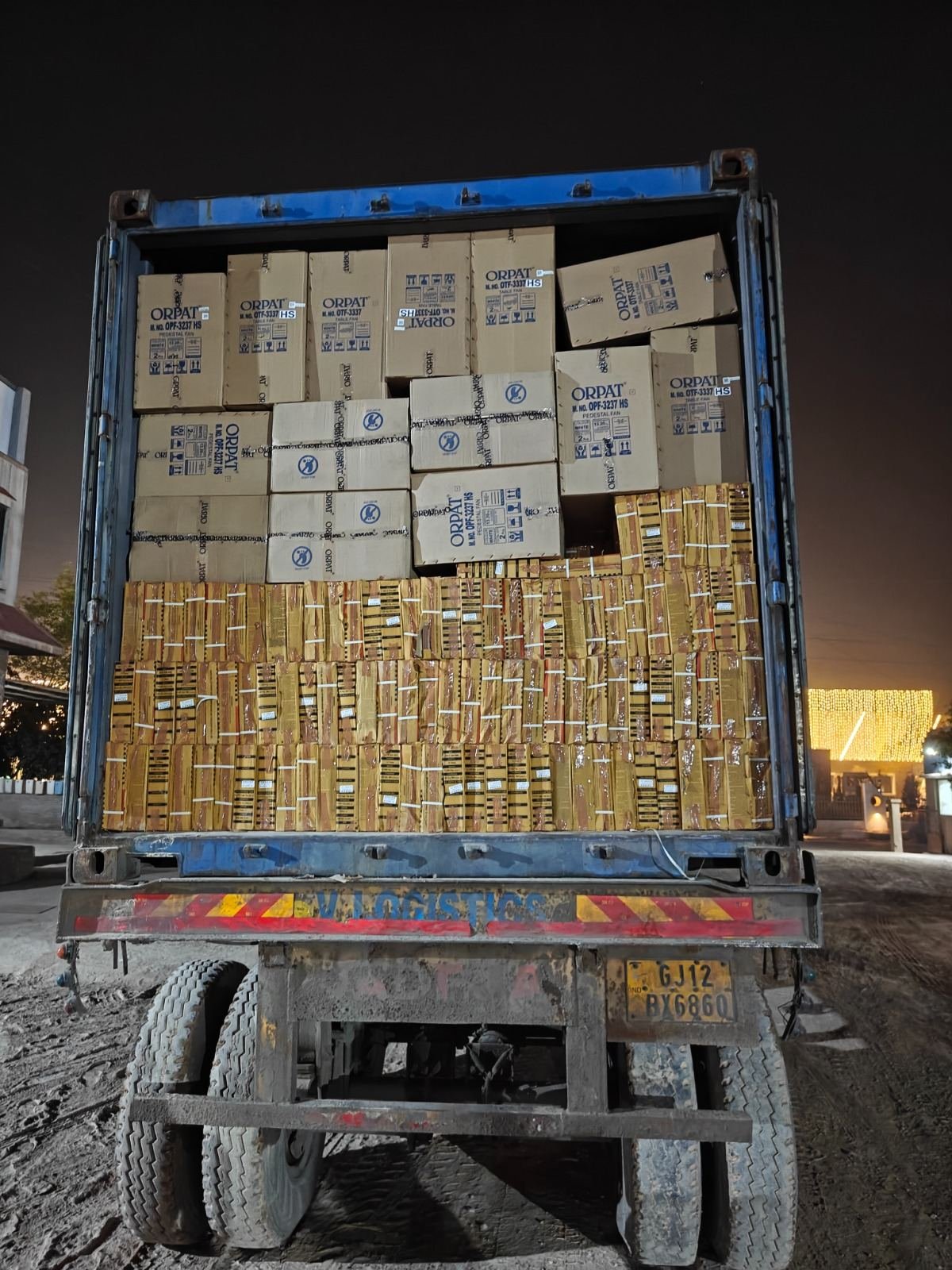
Ceiling fan cartons, mixed load 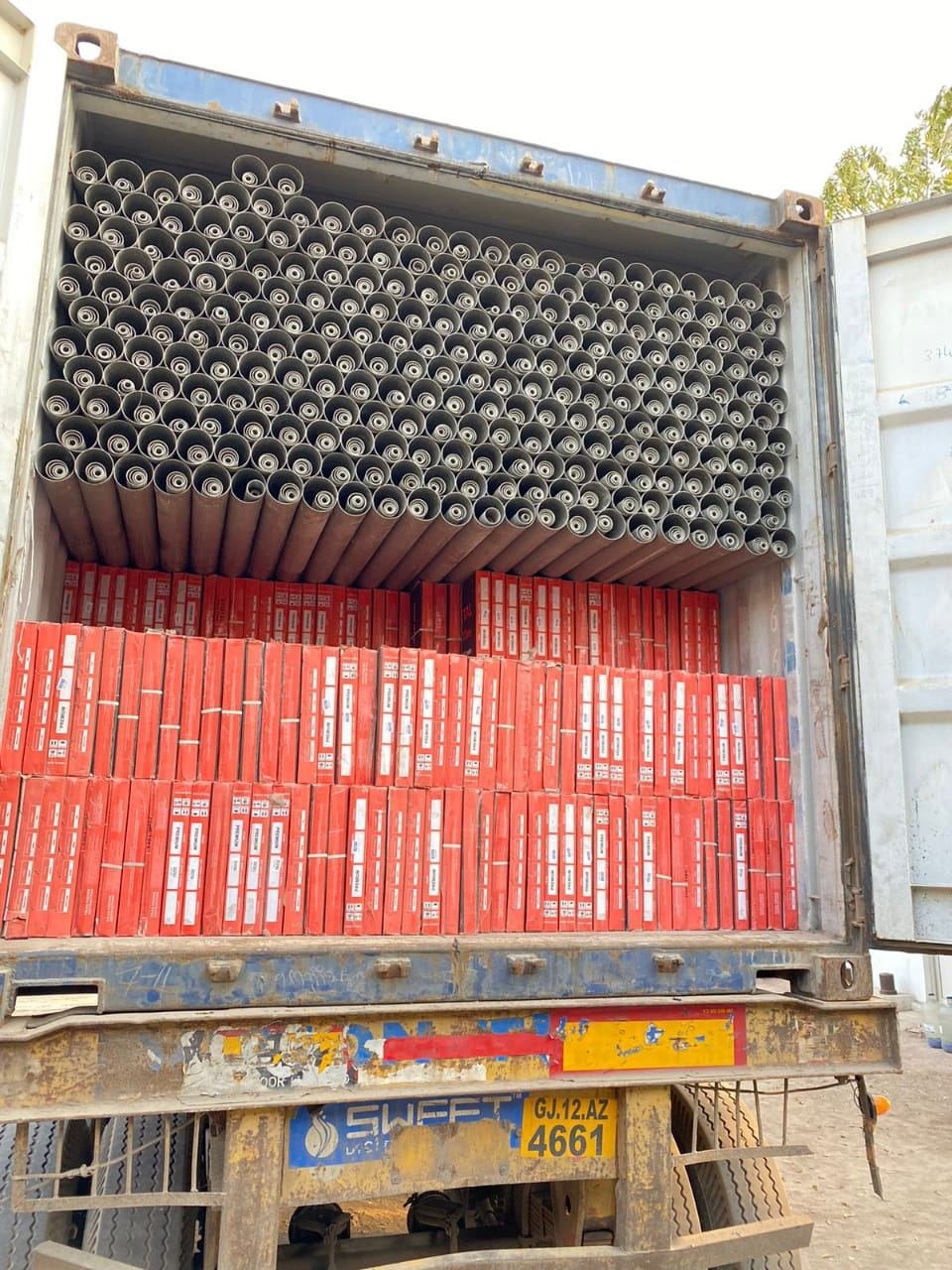
PVC pipe bundles, sealed for shipping
Talk to our export desk More guides
Frequently asked questions
What's a normal breakage rate for a tile shipment?
With proper packing and handling, a low single-digit percentage is typical. Higher than that usually points to weak cartons, poor palletisation, or rough handling at a transhipment port.
Who covers breakage in transit?
It depends on your Incoterm and insurance. Under CIF the exporter arranges the marine insurance; under FOB you do. Either way, photograph damage on arrival and raise it with the insurer, not just the supplier.
Can you use my carton branding?
Yes — private-label printed cartons are standard for distributors. Send your artwork with the order.